



If you drive a BMW, Mercedes-Benz, Audi, Volkswagen, Volvo, Porsche, or another European vehicle, you may already know that routine maintenance can be a little different from what you might expect with a typical American car.
That is especially true when it comes to the transmission.
Modern European vehicles use sophisticated automatic transmissions designed around specific engines, drivetrains, and driving characteristics. From Volkswagen and Audi DSG transmissions to the ZF 8-speed automatics found in numerous European models, these systems rely on carefully engineered components, specific fluids, and precise service procedures.
That means a transmission service is not simply a matter of draining some fluid and adding new fluid.
European Transmissions Are Engineered Differently
Automatic transmissions have become increasingly complex across the automotive industry, but many European manufacturers have adopted particularly sophisticated transmission designs.
For example, DSG (Direct-Shift Gearbox) transmissions use a dual-clutch design that allows the transmission to preselect gears and shift quickly. Other European vehicles use advanced conventional automatic transmissions, such as the widely used ZF 8-speed, which is designed to balance smooth shifting, performance, and efficiency.
These systems are engineered around specific vehicle applications. The transmission, computer controls, fluid, clutch packs, valve bodies, and other components all have to work together.
That complexity is one reason the correct maintenance procedure matters.
A service approach that may be appropriate for one automatic transmission may not be appropriate for another.
Transmission Fluid Isn’t One-Size-Fits-All
One of the biggest mistakes a generic repair shop can make is treating transmission fluid as a universal product.
It isn’t.
Different transmissions require different fluids with specific properties and manufacturer specifications. Using the wrong fluid can affect lubrication, hydraulic pressure, clutch operation, shifting behavior, and long-term transmission performance.
European manufacturers can also have very specific requirements for the fluid used in a particular transmission. Even two vehicles from the same manufacturer may not necessarily use the same transmission fluid.
That’s why it is important to identify the exact transmission in the vehicle before performing service.
At Performance Auto Specialists, our technicians work extensively with European vehicles and understand that the correct fluid and service procedure are part of the repair, not an afterthought.
Service Intervals Can Be Different, Too
Transmission maintenance is another area where European vehicles can create confusion.
Some vehicle owners have been told that their transmission fluid is “lifetime” fluid and therefore never needs to be serviced. Others may assume that every automatic transmission should receive service at the same mileage interval.
Neither assumption is necessarily appropriate for every vehicle.
Service recommendations can vary based on the manufacturer, transmission, model year, driving conditions, and how the vehicle is used. Some transmissions have specific fluid-change intervals, while others have procedures that call for inspection or service under particular conditions.
And when a vehicle is driven in demanding conditions (such as frequent stop-and-go traffic, heavy loads, extreme temperatures, or spirited driving) maintenance can become even more important.
The Service Procedure Matters
Changing transmission fluid sounds simple until you look at how some modern transmissions are actually serviced.
Certain European transmissions require the fluid to be checked or filled at a particular temperature. The vehicle may need to be positioned correctly, and the technician may need to follow a specific procedure to determine whether the fluid level is correct.
Some transmissions also have filters, seals, drain plugs, or other components that should be addressed during service.
Getting the fluid level wrong can create problems just as surely as using the wrong fluid.
That is why transmission service should be performed by technicians who understand the particular transmission being serviced rather than treating every vehicle the same way.
Modern Transmissions Depend on Electronics, Too
Today’s European automatic transmissions aren’t purely mechanical systems.
Transmission control modules and other electronic systems constantly monitor information such as vehicle speed, engine load, gear position, fluid temperature, and other operating conditions. The vehicle uses that information to determine when and how the transmission should shift.
When something goes wrong, the symptoms may not always point directly to a mechanical transmission problem.
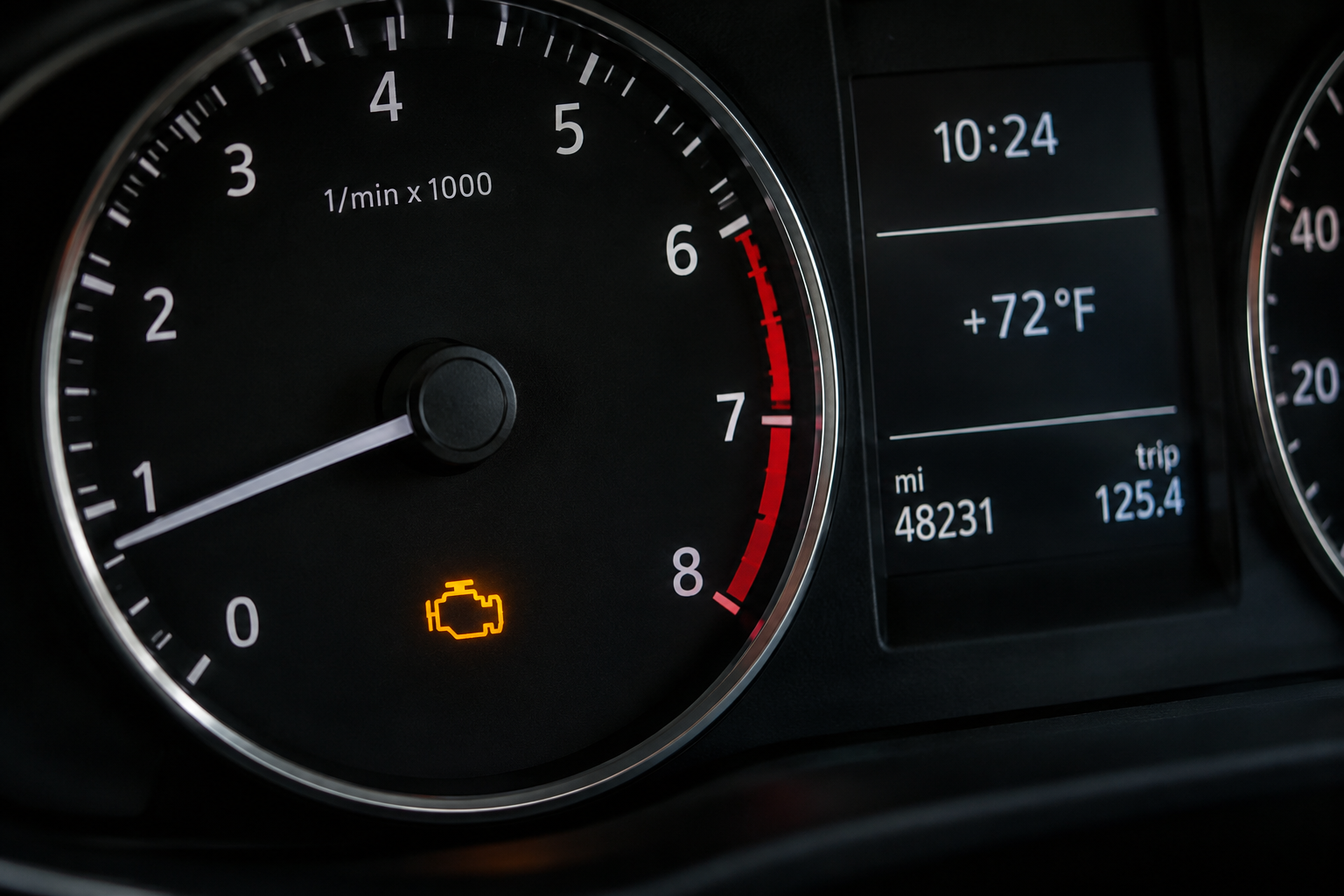
A warning light, delayed engagement, harsh shifting, slipping, unusual noises, or changes in shift behavior can have several possible causes.
That is where computerized diagnostics become especially important.
Performance Auto Specialists uses state-of-the-art computer diagnostics to help identify problems and get to the root of the issue. The goal isn’t simply to replace a part because a transmission doesn’t feel right. Proper diagnosis can help determine what is actually happening before repairs are recommended.
Don’t Wait Until Your Transmission Is Having Serious Problems
Transmission maintenance is one of those things that can be easy to overlook, especially when the vehicle seems to be driving normally.
But unusual shifting behavior shouldn’t be ignored.
If you notice a hesitation when the vehicle goes into gear, rough or delayed shifts, slipping, shuddering, unusual noises, or a warning light, having the vehicle inspected sooner rather than later can help identify the problem before it becomes more complicated.
Routine maintenance can also help you stay ahead of problems by giving a technician an opportunity to inspect the transmission and identify potential concerns.
European Vehicles Deserve European Auto Expertise
Performance Auto Specialists has been serving Wilmington-area drivers since 1991 and specializes in European vehicles, including BMW, Mercedes-Benz, Volvo, Volkswagen, MINI, Jaguar, Audi, and Porsche. The shop’s technicians and master mechanics have years of experience working with European vehicles and use computerized diagnostics to diagnose problems.
The shop also emphasizes ongoing technician training and ASE certification, along with OEM parts and a 24-month/24,000-mile warranty on covered OEM parts.
For European vehicle owners in Wilmington, having that specialized knowledge available can provide an important alternative to a generic repair approach.
Tags: